

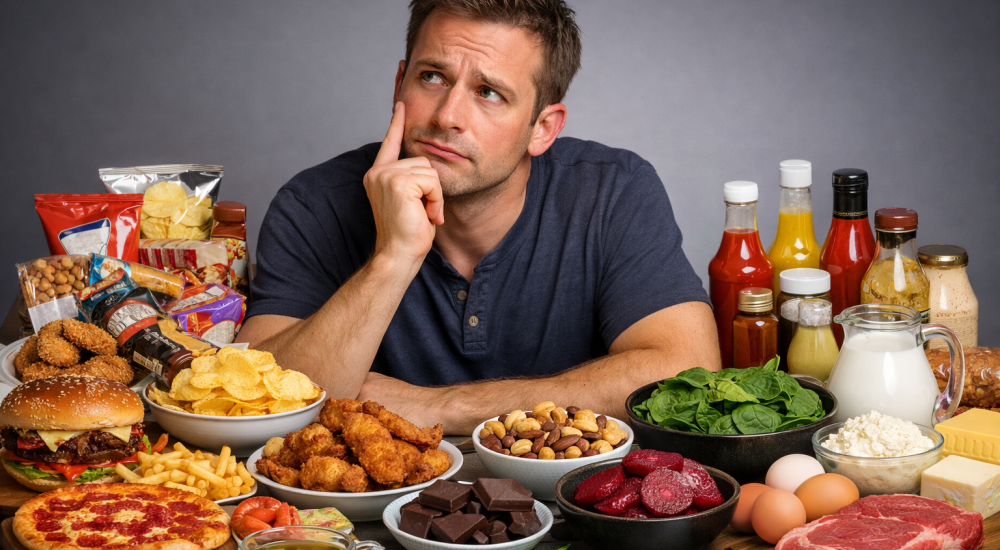
Diet plays a bigger role than most people realize
Kidney stones are not random. Diet strongly influences urine chemistry. But the goal is not to eliminate everything. It is to make balanced, sustainable changes.
1. High sodium intake
Excess salt increases calcium excretion in urine. More urinary calcium = higher risk of calcium stones. Common hidden sodium sources:
- Processed foods
- Restaurant meals
- Packaged snacks
- Sauces and dressings
Reducing salt is one of the simplest preventive steps.
2. High oxalate foods (for calcium oxalate stones)
Oxalate can bind with calcium and form stones. High oxalate foods include:
- Spinach
- Nuts
- Beets
- Chocolate
- Tea
Important: You do not need to eliminate these completely. Instead, combine them with adequate dietary calcium.
3. Low calcium intake (a common mistake)
Many patients reduce calcium after a stone. This can increase oxalate absorption and raise stone risk. Normal dietary calcium intake is important unless medically restricted.
4. Excess animal protein
High intake of red meat can:
- Increase uric acid
- Reduce urinary citrate
- Increase stone risk
Moderation is key.
What should you eat?
Focus on:
- Adequate hydration
- Fresh fruits and vegetables
- Balanced calcium intake
- Moderate protein
- Low sodium diet
Citrate-rich foods like lemon and citrus fruits may help reduce risk.
Diet must match stone type
Not all stones are the same.
- Calcium oxalate stones
- Uric acid stones
- Infection stones
- Cystine stones
Each has different dietary considerations.
Use our Diet & Stone Risk Checker
Learn your stone recurrence risk score
Read our article on hydration strategy