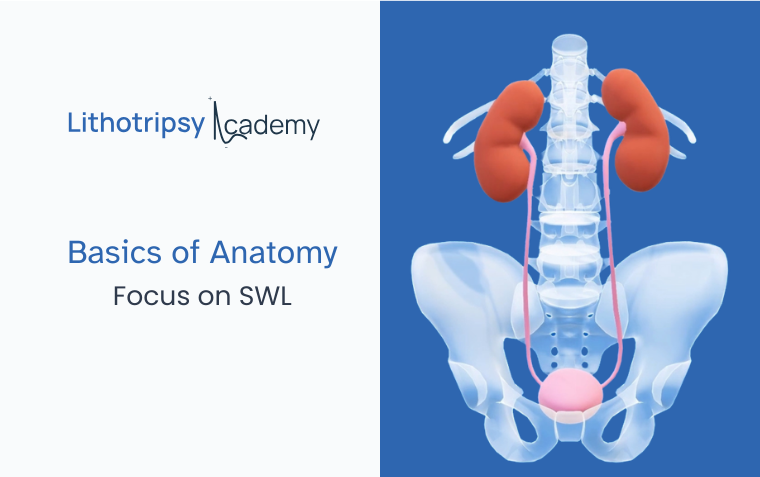
A clear understanding of anatomy is essential for performing safe and effective Extracorporeal Shock Wave Lithotripsy (SWL). This course, Basics of Anatomy for SWL, is designed to build a strong anatomical foundation with direct relevance to shock wave treatment of urinary stones.
The course focuses on the anatomy of the urinary system, including the kidneys, ureters, bladder, and surrounding structures, with special emphasis on how anatomical relationships influence stone localization, shock wave focusing, patient positioning, and treatment outcomes during SWL. Key anatomical variations, age-related differences, and clinically relevant landmarks are explained in a practical, application-oriented manner.
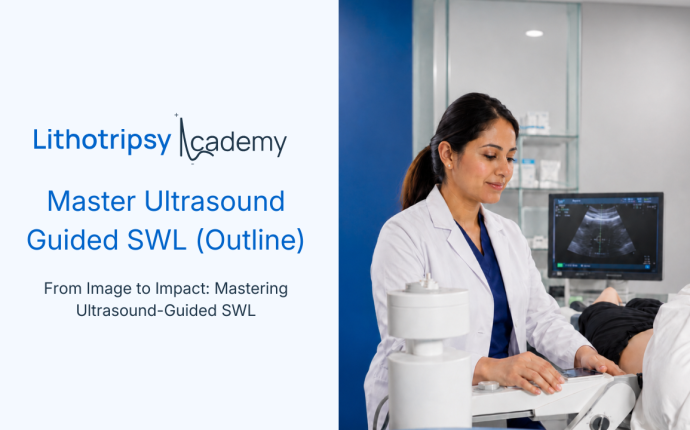
Rather than being a general anatomy course, this program is tailored specifically for SWL practice. It bridges basic anatomical knowledge with real-world clinical scenarios encountered during imaging-guided lithotripsy, helping learners understand why anatomy matters at every step of treatment.
This course is ideal for urologists, residents, SWL operators, technicians, and biomedical professionals who want to strengthen their anatomical understanding to improve treatment accuracy, safety, and overall SWL outcomes
Topics of Course
-
01:06
-
Intro to urinary system
00:31
-
Kidney location
00:25
-
Kidney function
00:25
-
Internal anatomy of kidney
00:27
-
Calyceal anatomy
01:06
-
Ureter anatomy
00:22
-
Ureter narrowing
00:00
-
Organs surrounding right kidney
01:43
-
Organs surrounding left kidney
01:23
-
Organs surrounding ureter
01:06
-
Anteriro vs posterior shockwave window
01:12
-
Abdominal vessels
01:12
-
Common renal anomalies
01:43
Your Instructor
Lithotripsy Academy is a dedicated educational platform focused on advancing knowledge and clinical practice in shockwave lithotripsy and urolithiasis management.
All courses on this platform are conceptualized, structured, and designed by Dr. Sameer Parmar, with over two decades of experience in shockwave lithotripsy. His work is centered on translating clinical experience, scientific evidence, and real-world practice into structured, practical learning.
Select courses are further enriched through collaboration with invited international faculty, bringing diverse clinical perspectives and global expertise into the learning experience.
Each course reflects a carefully curated blend of evidence-based guidelines and expert clinical insight, ensuring that learners gain not only knowledge, but also a deeper understanding of decision-making in real-world practice.